

Do You Know What Green Sakthi Does?
The Full Ecosystem Behind Every Tree

When you donate to Worldwide Walk 4 Trees, or lace up your shoes and walk this June, you are joining something that has been quietly transforming a landscape and thousands of lives since 1998. Most people know Green Sakthi as an environmental program. What it actually is, is harder to put into a single sentence.
Here is the full picture.
From barren land to living ecosystem
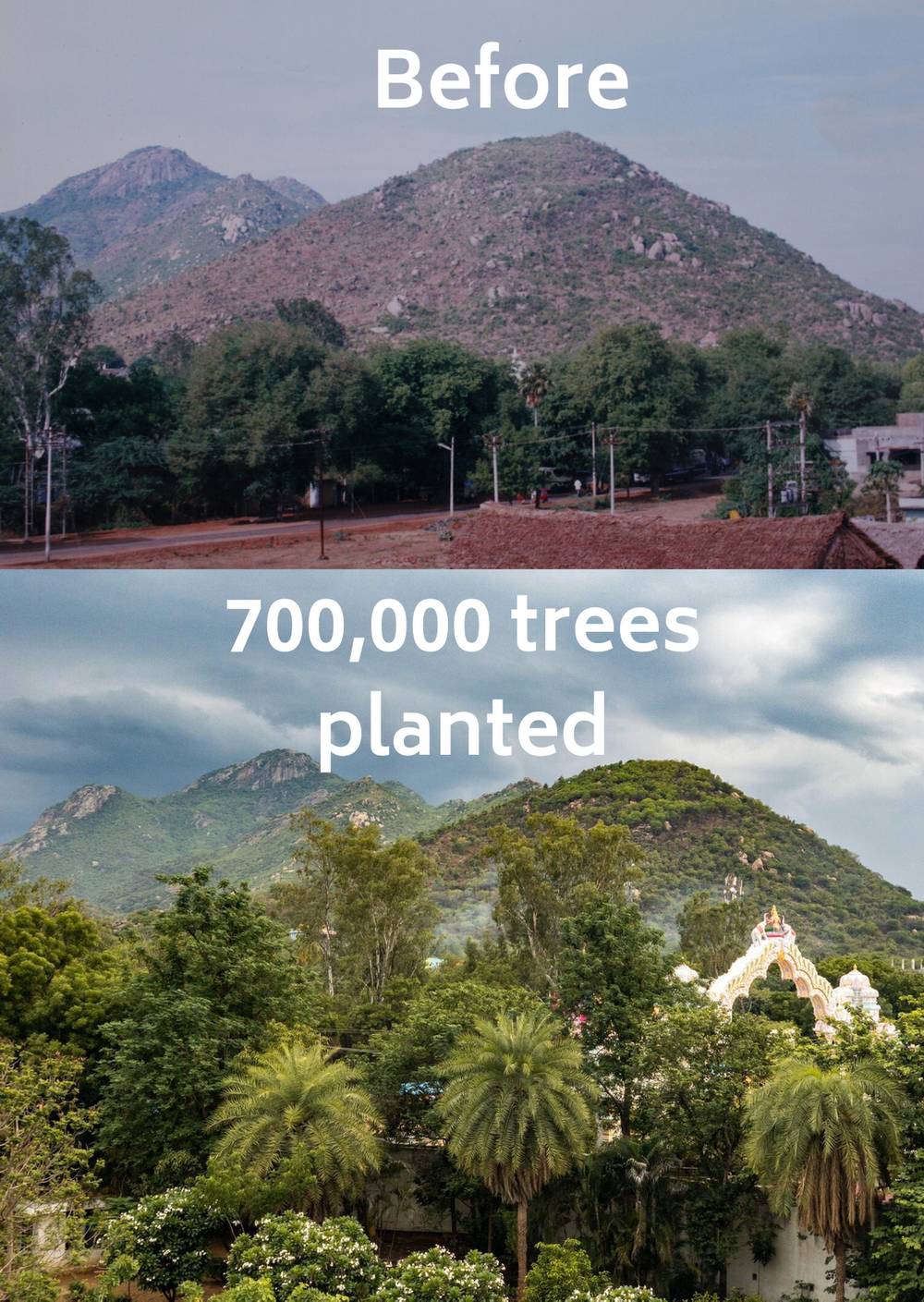
When Green Sakthi began in 1998, the land surrounding Sripuram was arid, compacted, and largely stripped of vegetation. The Kailash Giri Hills were completely barren. There was no shade, no birdsong, no undergrowth. What existed then and what exists now are two entirely different landscapes.
Today Sripuram and its surrounding environs form a thriving, self-sustaining ecosystem. The hills are forested. The air is cooler. Rainfall has increased as tree cover has grown, and the land now retains what it receives. Underground water levels, once at 1,500 feet, have risen to roughly 60 feet since the Varuna Yagam began. Butterflies, birds, insects, and small mammals have returned in numbers that were unimaginable at the outset. More than 20 species of butterflies and 25 species of birds have been recorded on the campus alone. Beyond the campus, the surrounding region has seen the return of wildlife that had long disappeared from this part of Tamil Nadu, drawn back by the recovery of habitat, food sources, and water. The restoration of one acre of land creates conditions for dozens of species to return. Multiply that by 1.5 million trees and the scale of what has changed becomes vivid.
This did not happen by accident. It happened through more than two decades of disciplined, community-led work, and it is still happening.
The nursery: where every forest begins
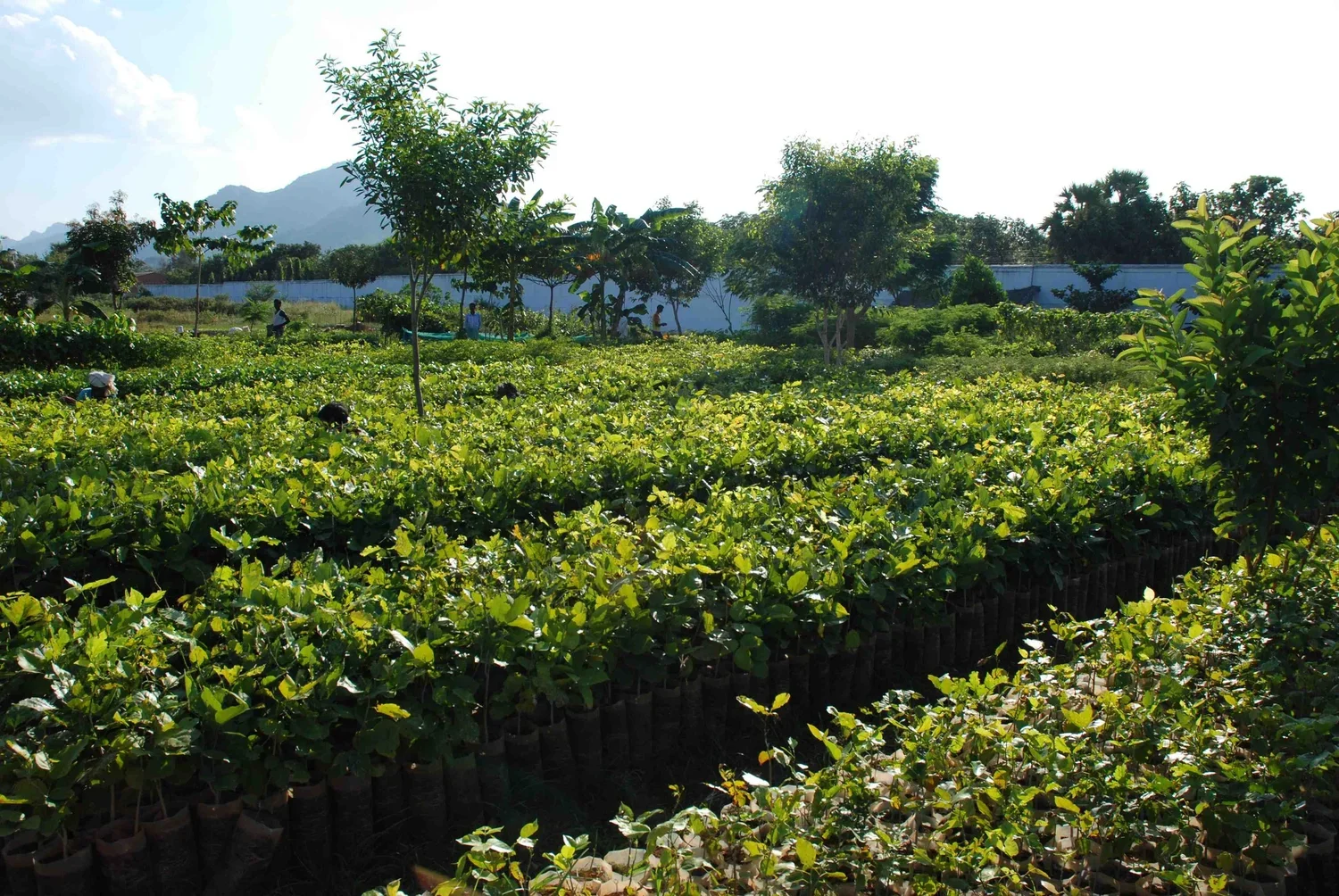
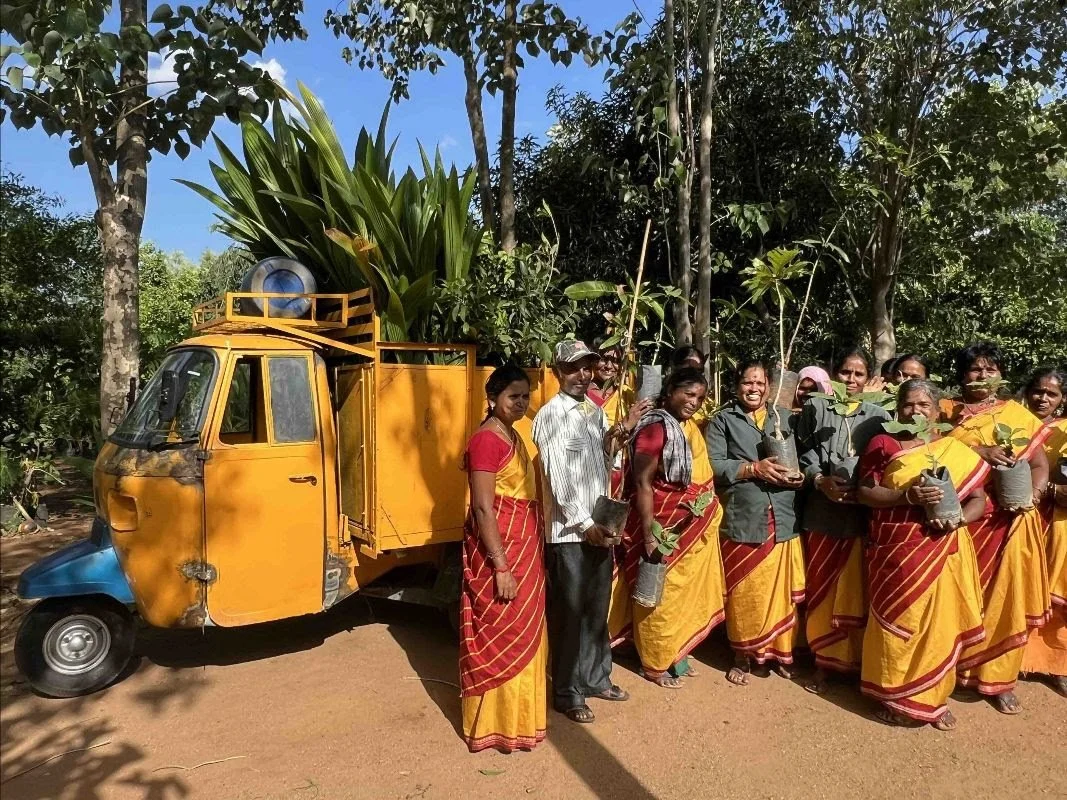
Every tree planted by Green Sakthi begins life in the Green Sakthi Tree Nursery. Here, an all-women team grows indigenous saplings from seed, nurturing each one with on-site compost until it reaches five feet and is ready for planting. At any given time the nursery holds over 100,000 saplings, destined for forests, farmlands, schools, police departments, government hospitals, and public institutions across Tamil Nadu. Up to 100,000 trees are donated every year. To date, over one million native trees have been donated to local communities, 600,000 of them distributed across 300 villages.
Behind every tree is a woman who grew it from seed, a child who pressed it into soil, and a village breathing cleaner air.
Women at the heart of it
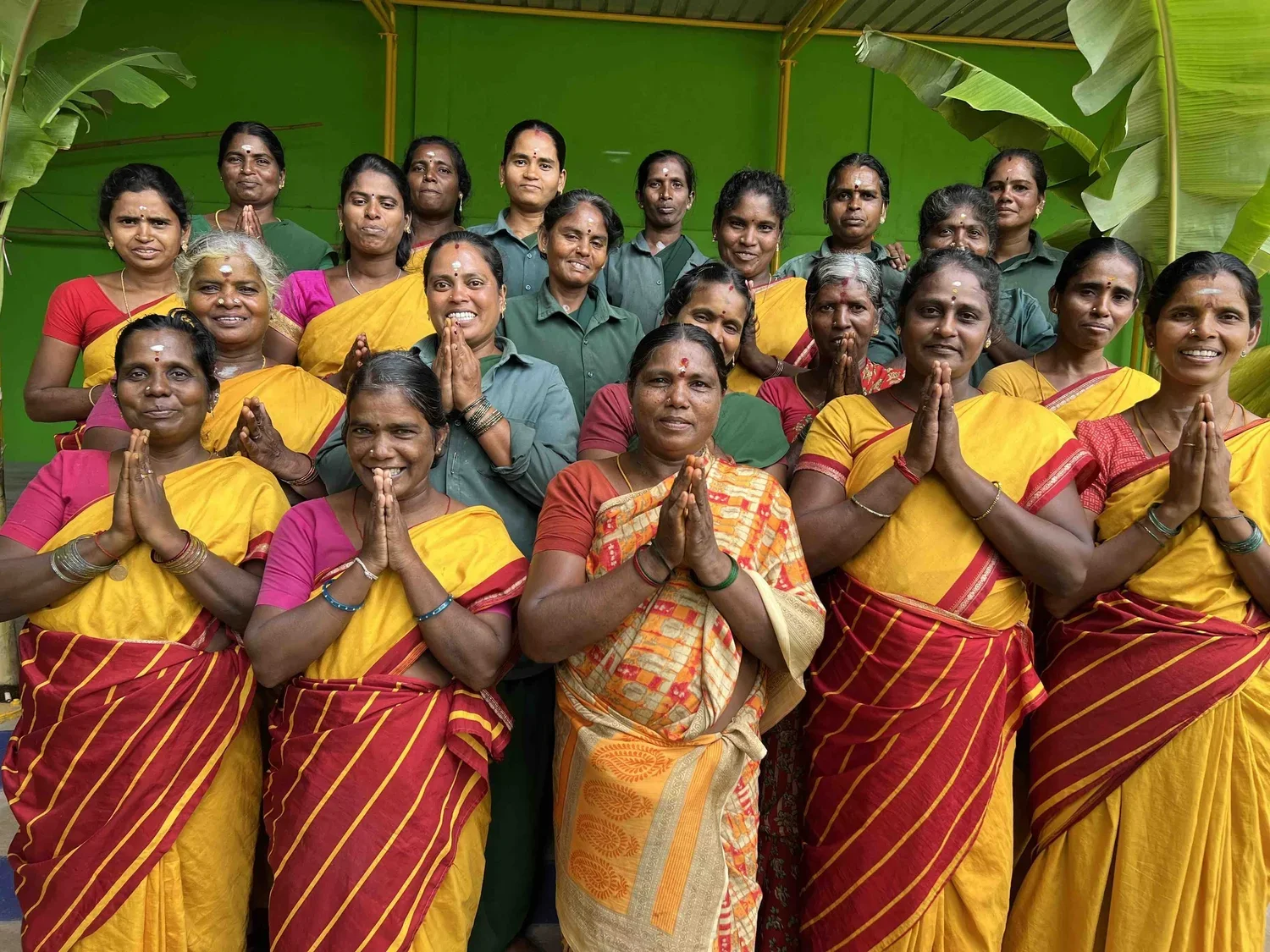
180 women are employed across Green Sakthi's nursery, forest regeneration, and zero-waste programs. Three of them, Sanjani, Vedha, and Monisha, all agricultural science graduates, serve in senior leadership and supervisory roles. For many of these women, their Green Sakthi salary is the primary income supporting an entire family. Environmental restoration and women's empowerment are not parallel goals here. They are one and the same work.
EXNORA: nothing wasted, everything returned

The EXNORA Zero Waste Management Program has operated since 1997, collecting and hand-sorting more than two tons of waste every day. Biodegradable waste goes through a six-month vermicomposting cycle and becomes what the team calls black gold, rich compost used across the campus and sold at the temple. Paper, glass, and cardboard are recycled. Plastic is washed, dried, and sold. The program employs nearly 200 local workers, including people with disabilities. It runs without electricity, generates its own revenue, and has become a working model for rural zero-waste management that communities around the world have begun to adopt.
The compost feeds the nursery. The nursery grows the trees. The trees restore the land. Nothing is wasted. Everything returns.
Food forests and farmer support
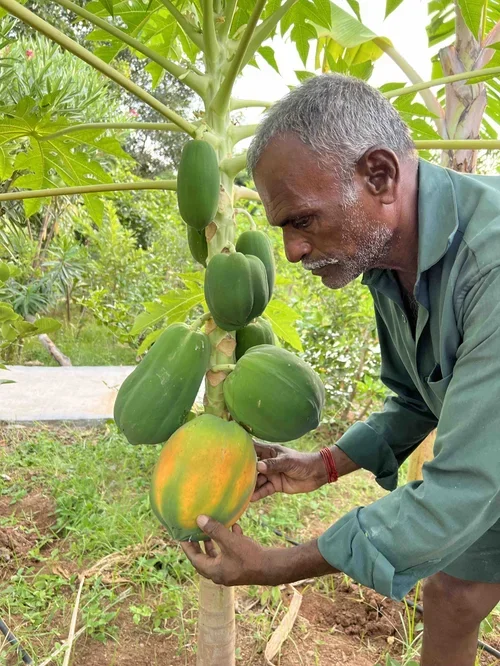
On one acre of the Green Sakthi campus, a five-layer food forest pilot is changing how local farmers understand their land. Developed with Mr. Raju, a former chemical engineer who left a career promoting synthetic fertilizers to dedicate his life to organic farming, the method restores soil health, increases water retention, supports biodiversity, and significantly raises farmers' annual income. Free monthly classes teach anyone who wants to learn how to replicate the model on their own land. The organic produce grown here feeds into Green Sakthi's kitchens, where around 5,000 people are fed every day at no cost, with meals prepared according to Ayurvedic principles using locally sourced ingredients.
Sacred groves and Siddha medicine
Surrounding the Sri Narayani Holistic Centre, a 16-acre sacred grove is being cultivated according to the principles of Siddha medicine, the world's oldest living medical tradition. Every tree, shrub, and herb has been chosen for its medicinal properties and the plants are used daily to treat patients at the holistic centre. Within the grove, Green Sakthi is also developing medicinal, aromatic, and contemplative gardens: spaces for learning, healing, rest, and meditation.
Animal and wildlife protection

At Sri Narayani Peedam, the commitment to compassion extends to every living being. A fully equipped veterinary clinic operates on campus, staffed by a full-time veterinarian and assistant, caring for birds, bees, butterflies, dogs, cats, monkeys, donkeys, cows, goats, and the full spectrum of wildlife sharing this landscape. The stray dog program addresses public health and wildlife protection through rabies vaccination, birth control, regular feeding, and clean water, reducing suffering while creating safer conditions for people, animals, and the recovering birdlife of the restored hills. This is not animal welfare as an afterthought. It is a natural extension of Amma's vision: that a truly compassionate community leaves no living being behind.
Some numbers:
1.5 million trees planted on campus and in the surrounding region
1 million native trees donated to local communities, including 600,000 across 300 villages
100,000 saplings in the nursery at any time
2 tons of waste composted daily
20+ butterfly species and 25+ bird species now living on restored land
Water levels risen from 1,500 feet to roughly 60 feet
6,000+ children educated through the Green Sakthi Club
180 women employed
5,000 people fed daily at no cost
Are you inspired to act? Join us. Be the change.
For as little as $10 a month, a Green Sakthi membership directly supports tree planting, women's employment, tree donations to farmers and villages, and environmental education for children. This is not a symbolic contribution. It is a practical one, with measurable outcomes and more than two decades of proof that it works.
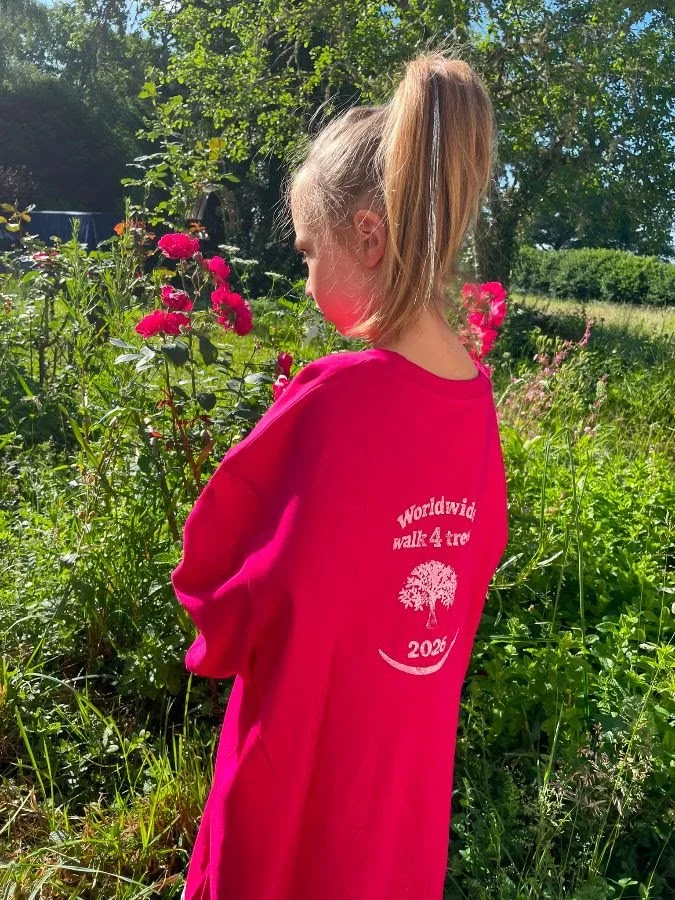
And this June, you can go one step further. Walk for trees. Every step raises funds that go directly into this ecosystem, into the nursery, into the farmers' hands, into the land.